
Why the world's best avocados grow on East Africa's highlands
Volcanoes built these hills. Iron turned the soil red, altitude keeps the air cool, and the slopes drain before the roots ever notice the rain.
What the altitude does
Volcanic soil
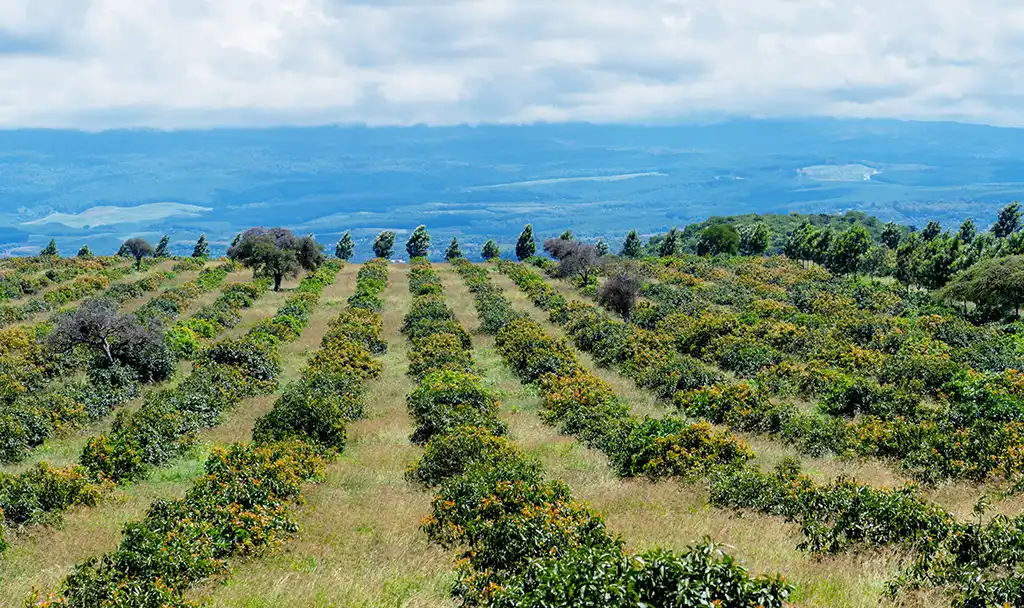
Volcanoes built these hills. Central Kenya's orchards stand on deep red soils weathered off Mount Kenya and the Aberdares — free-draining ground counted among the best agricultural soil in the region. That drainage is not a detail: avocado roots cannot stand in water, and on these slopes nothing stands after rain.
Altitude
The orchards sit between roughly 1,600 and 1,900 metres. Highland nights run cool, and cool nights slow the fruit down — a longer, slower season on the tree, and a harvest window that stretches further than lowland origins can manage.
The equator
This close to the equator the year moves between low seasons and high seasons — and with two origins nine hundred kilometres apart, one origin's high season covers the other's low, so the two harvest windows overlap into one long season. One origin alone cannot offer that continuity. Two can.
Rain-fed
The highlands do the irrigating. Rain falls on the slopes, the slopes drain into the valleys, and the trees take what they need on the way down.
They call it green gold.
Parachichi ni dhahabu ya kijani.
KISWAHILI — "AVOCADO IS GREEN GOLD"
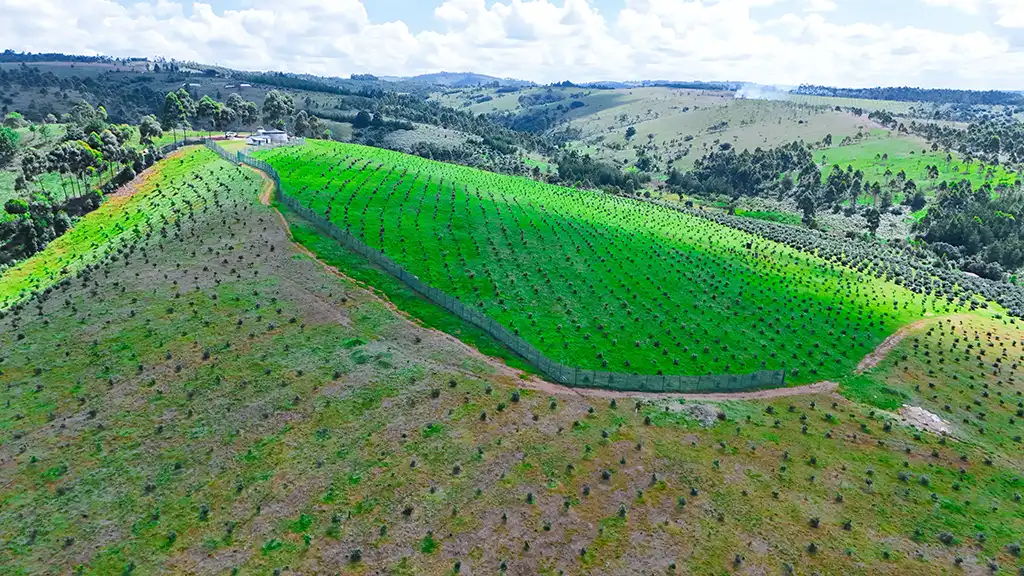
Across Kenya and Tanzania, the avocado has earned a modern nickname — green gold. Not an old folk name: it is what farmers and newspapers started calling the fruit as they watched what it does for a hillside economy. In Kenya, avocados have grown into one of the country's leading horticultural exports — close to a fifth of horticultural export value in 2024. Around Njombe in the Southern Highlands, the boom has drawn more than a dozen export companies and the region's first avocado-oil factories.
The gold is in what the fruit replaces. Across the highlands, farmers who once grew coffee have switched to Hass, and press reports tell of farmers earning several times their old coffee income from far fewer trees. Roughly seven in ten of Kenya's nearly one million avocado farmers are smallholders — many farming less than an acre. When this fruit leaves the hills for Europe, the value comes back down the same road.
In Kiswahili the name is the same — dhahabu ya kijani — used by farmers and newspapers on both sides of the border, and by Tanzania's Ministry of Agriculture at the national avocado meeting held in Njombe in 2025. Around Njombe itself the fruit has a second name: lulu ya Njombe, the pearl of Njombe.
SOURCES: BUSINESS DAILY AFRICA 2024 · THE CITIZEN (TANZANIA) 2026 · KENYA NEWS AGENCY · AL JAZEERA 2020 · COPRA / MINISTRY OF AGRICULTURE, TANZANIA 2025 · TAIFA LEO 2026
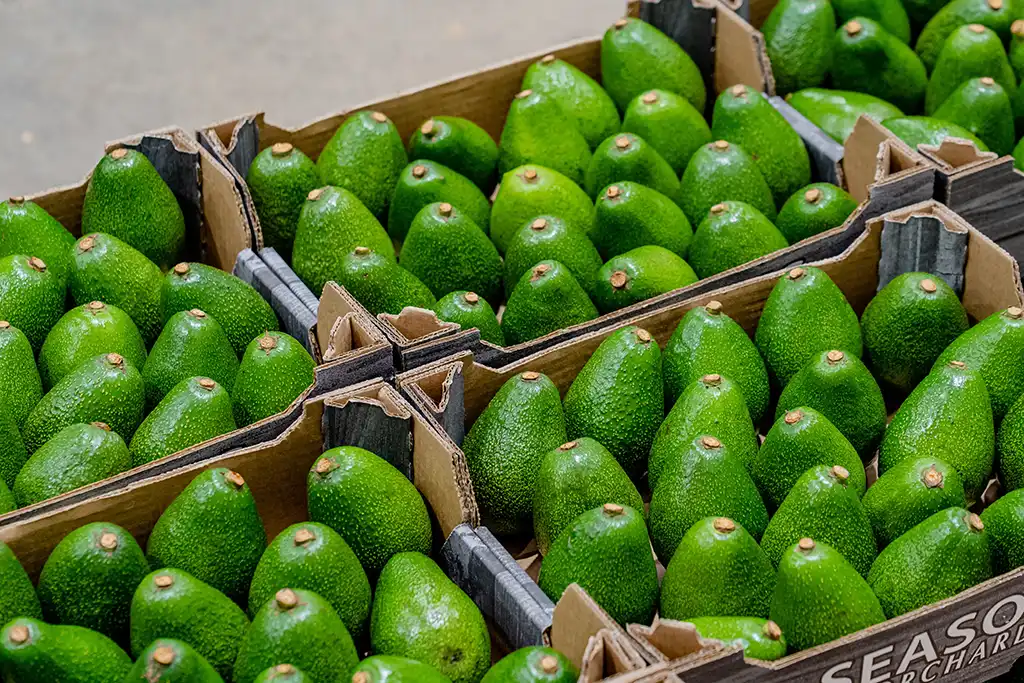
HASS, PACKED FOR EXPORT
Kenya has been Africa's leading avocado-growing nation for over a decade — the world's sixth-largest producer, with exports that have grown year on year. Across the border, Tanzania's Southern Highlands are one of the fastest-growing origins on the continent; around Njombe, peer-reviewed land mapping finds nearly a third of the district suited to the tree. And the timing matters as much as the volume: Kenya's peak lands in March and April, in the gap between Mexico's winter crop winding down and the Southern Hemisphere's ramp-up — the hardest weeks of the year for European buyers to cover. A quarter of Kenya's export volume already goes through the Netherlands.
SOURCES: USDA FAS GAIN 2026 · FAO/CBI · EUROPEAN COMMISSION 2024 · MDPI HORTICULTURAE
Where it grows, and what is running this month.
Every marker is a place we grow, grade or ship from. Select one for its numbers — and slide the month to see how two origins hand the season to each other.
Tap a marker for its numbers · slide the month to see what's in harvest
Central Kenya orchards
Red volcanic soil on slopes under the ranges — about two hundred and forty hectares of our own trees.
- Planted
- ≈ 240 ha
- Varieties
- Hass, Fuerte
- Soil
- Red volcanic, free-draining
- Logistics
- Farm gate to packhouse, same day
In March: 6 Kenyan and 0 Tanzanian sites in high season. Kenya carries the programme this month.
Put a programme on the water.
Volumes, calibres and windows — tell us what your market needs.