
Five degrees, real-time, one standard.
How Hass leaves the highlands: graded on one floor, lot-coded from the weighbridge, held at 5.0 °C and monitored in real time — and every container checked before a pallet moves.
- cold_room
- 5.0 °C / 90% RH
- telemetry
- O₂ / temp / RH — real-time
- transit
- CA container, Mombasa
- arrival
- Rotterdam, hard
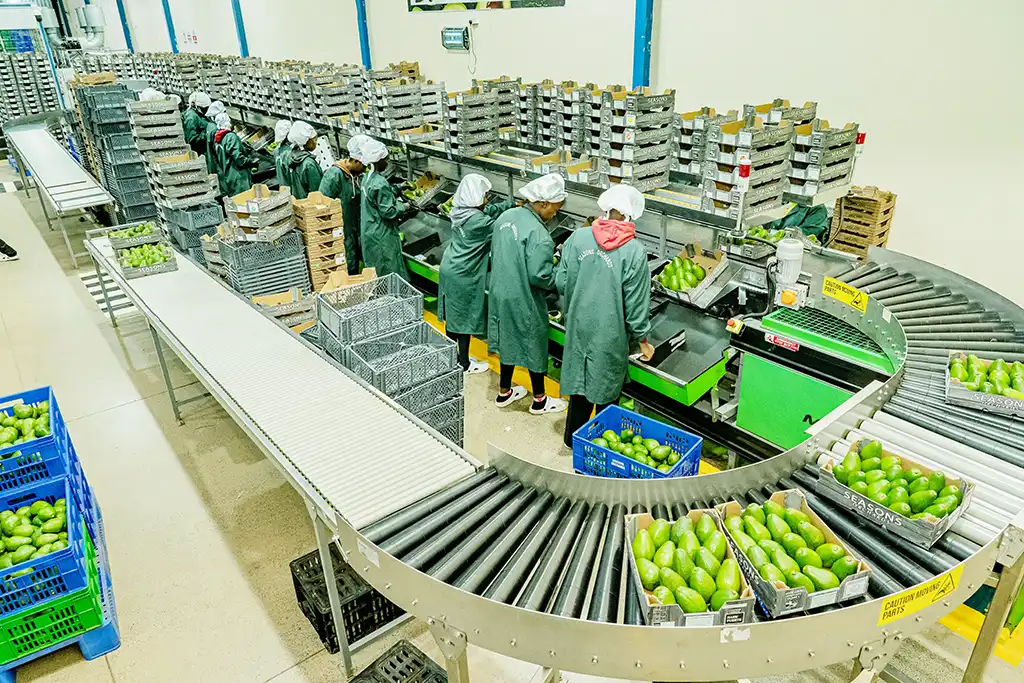
GRADING LINE · ONE STANDARD
Everything around the fruit changes. The fruit does not.
Farm gate
Collected before first light, while the field heat is still out of the fruit.
Packhouse
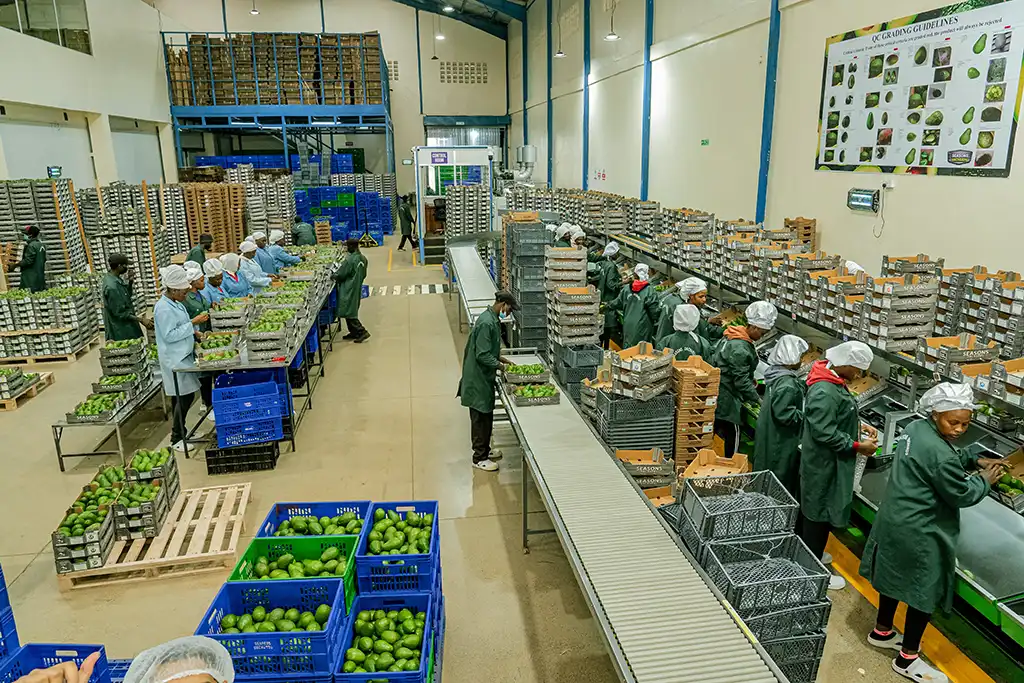
Every fruit passes one grading line, to one standard, before it earns the Seasons stamp.
Cold room
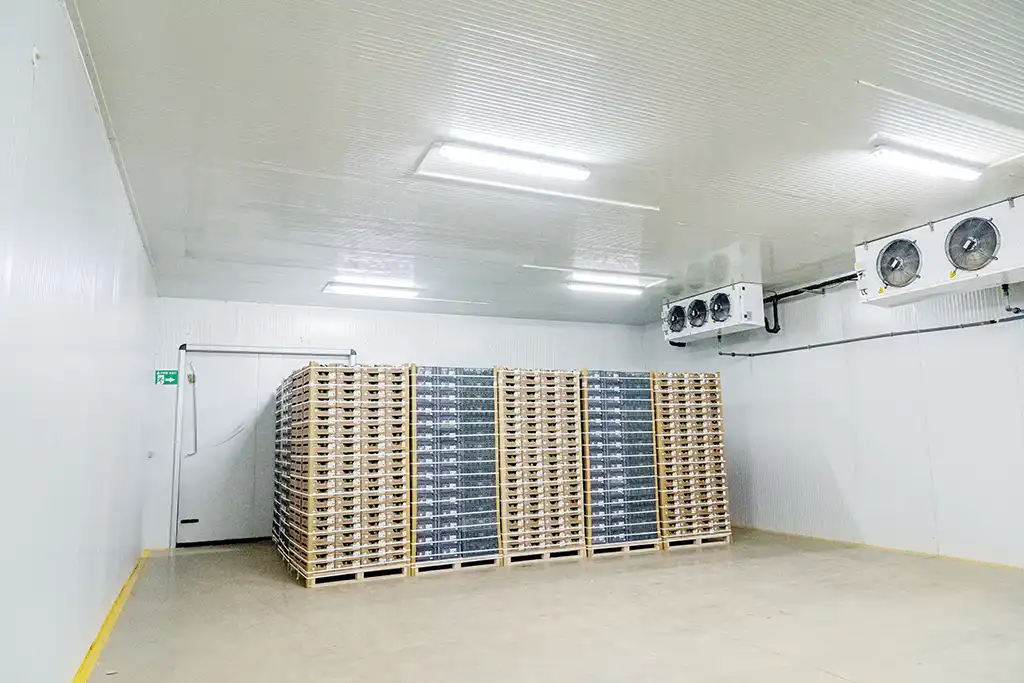
Held at 5 °C and 90% humidity — temperature and humidity streamed live from in-room sensors.
Mombasa quay
Thirty-one degrees on the tarmac. Nothing reaches the pallet.
At sea
Controlled atmosphere, with oxygen, CO₂ and temperature monitored in real time across the voyage.
Rotterdam
Still hard. Still waiting. Ripened where it is sold, not where it grew.
- 01Farm survey
- 02Harvest plan
- 03Weighbridge intake
- 04QC grading (Category 1/2 · Big/Small)
- 05Lot coding
- 06Processing
- 07Packing (4 kg / 10 kg)
- 08Cold room (5.0 °C / 90% RH, monitored real-time)
- 09Sealed reefer dispatch
Sea or air.
The programme route.
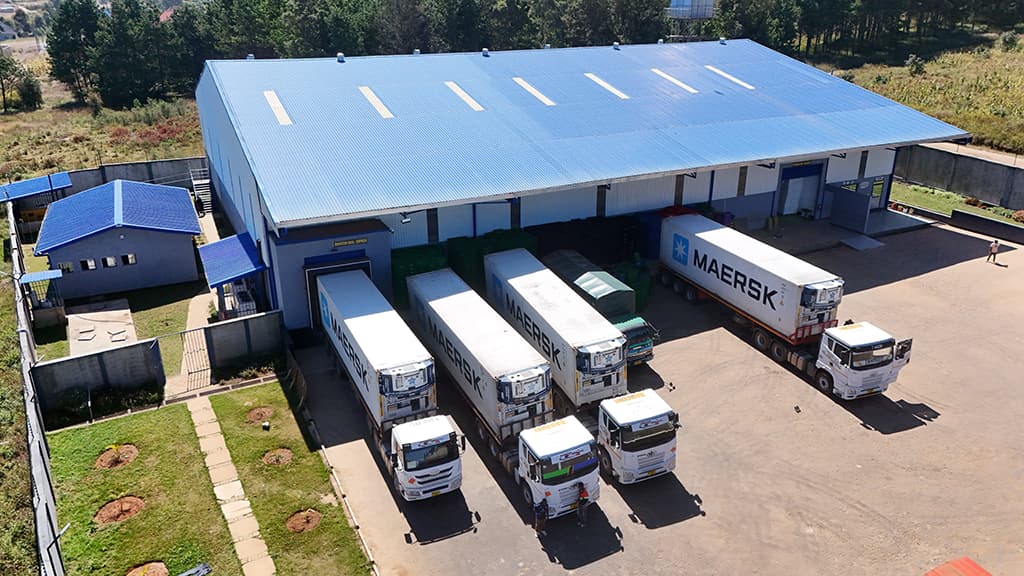
Mombasa to Rotterdam in a controlled-atmosphere reefer, 5.0 °C the whole way and monitored in real time. The route for volume, and the one the cold-chain trace above describes.
MOMBASA → ROTTERDAM · CA REEFER · REAL-TIME MONITOREDThe short-window route.
Out of JKIA Nairobi, KIA Kilimanjaro or JNIA Dar es Salaam, landed in Europe the next day. Chosen by your preference and the fruit's maturity — for tight windows and early-season fruit.
JKIA / KIA / JNIA → EUROPE · AIR · NEXT DAY- Reefer power
- Container cleanliness
- Floor condition
- Door rubber
- Odor check
- Water test
- Pre-cool completed
Seven checks, every container, before a single pallet moves.
Four things we don't get to blame on the weather.
One standard, from orchard to container.
Every lot is graded on the same floor, by the same graders, to the same category — there is no second standard for a different picking. Fruit that fails the grade is not relabelled and it is not loaded — the cost of that decision sits with us, not with you.
GRADED TO ONE STANDARD · CATEGORY 1 & 2 · BIG / SMALL
A code against every lot.
Every lot carries a code from weighbridge intake to the container seal. If a pallet arrives below grade, we can trace it to the farm it came from, the QC record that passed it and the cold-room log for the night it was stored — and say what changed as a result. Our teams are paid against graded weight, by M-Pesa, and the settlement is recorded the same way.
LOT-CODED FROM WEIGHBRIDGE TO SEAL · SETTLED BY M-PESA
The programme we agreed is the programme that ships.
Two hundred and forty hectares in Central Kenya, a hundred and eighty in Njombe — different rainfall systems, different harvest peaks. When one origin runs short, the other covers, rather than a phone call in week three of a window. Two origins are what availability and continuity mean in practice.
TWO ORIGINS · 240 HA + 180 HA · TWO HARVEST WINDOWS
Judgement that holds from March to October.
Category 1 has to mean the same thing at the end of a season as it did at the start, so grading is a trained, supervised job: QC officers and line supervisors sign off every intake, and field agents walk our own blocks in season, so advice arrives before the problem does.
GRASP-ASSESSED LABOUR PRACTICE · QC SIGN-OFF AT INTAKE





AUDITED & CERTIFIED — GLOBALG.A.P. · GRASP · SMETA · BRCGS · RAINFOREST ALLIANCE · EU ORGANIC
Put a programme on the water.
Volumes, calibres and windows — tell us what your market needs.